
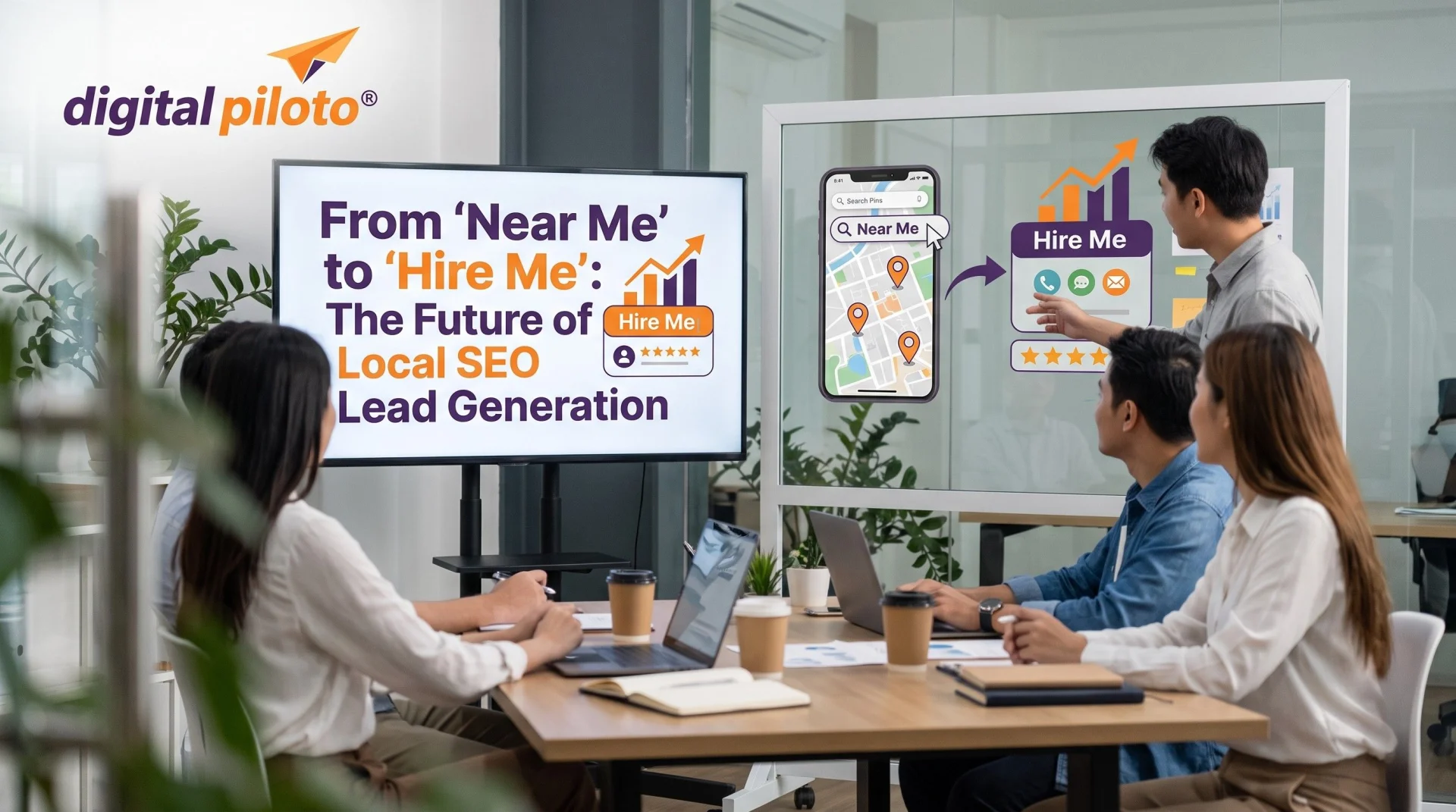
A customer searches for a nearby service, opens a few results, checks some reviews, and makes a decision. The entire process might take minutes, yet it can determine which business wins the next sale. For local businesses, the challenge is no longer simply appearing in search results. It is turning that visibility into trust, meaningful enquiries, and paying customers.
This is where local SEO lead generation is evolving. A well-planned strategy helps businesses move beyond being discovered and gives potential customers compelling reasons to get in touch. Working with an experienced digital marketing company can help connect local search visibility with website improvements, customer reviews, and conversion strategies that support sustainable growth.
Why Local Search Is Becoming a Lead Generation Channel
Think about someone searching for an emergency electrician, a nearby dental clinic, or a commercial cleaning service. They are not necessarily interested in reading ten articles about the industry. They want to identify a suitable provider, understand whether that provider can help, and take the next step without unnecessary effort.
That is what makes local search valuable. It often captures people when they already have a specific need. However, appearing in front of these customers does not automatically translate into business.
Google explains that local search rankings are primarily influenced by relevance, distance, and prominence. In simple terms, search systems consider how well a business matches a query, how geographically appropriate it is, and how well known or established it appears. Google's official guide to improving local ranking on Google explains these factors.
For business owners, the practical lesson is straightforward: build a strong local presence, communicate your value clearly, and make contacting your business easy. Rankings create opportunities, but the experience that follows helps turn those opportunities into revenue.
Understand the Journey From “Near Me” to “Hire Me”
Local customers rarely follow identical paths. Someone looking for a restaurant may decide within minutes, while a business owner choosing an accounting firm might compare several providers over a few weeks. Your marketing needs to account for these differences.
Match your content to customer intent
Local search intent generally falls into three useful categories:
- Exploration: The customer wants to understand a problem or discover available services. Helpful guides and educational content can introduce your business.
- Evaluation: The customer compares providers, pricing, qualifications, reviews, and service options. Detailed service pages and authentic testimonials help answer these questions.
- Conversion: The customer is ready to call, book, request a quote, or visit. Clear contact details and straightforward calls to action reduce friction.
Consider a Kolkata-based interior design company. A person searching for renovation ideas may appreciate a guide to planning a home makeover. Someone comparing interior designers needs project examples, service details, and an understanding of the process. A visitor ready to hire needs an easy way to arrange a consultation.
One generic homepage cannot answer every question equally well. A better approach creates a connected journey, allowing customers to move naturally from learning about a service to evaluating it and finally making contact.
Make Your Google Business Profile a Trust-Building Asset
Your Google Business Profile can influence a customer's decision before they ever visit your website. It may display your location, operating hours, reviews, photographs, services, and contact options together in one place.
When this information is incomplete or outdated, potential customers may hesitate. Incorrect opening hours can send someone to a closed shop. An unanswered review may leave questions about customer service. A missing phone number can make an otherwise interested visitor abandon the search.
Strengthen your profile by focusing on the essentials:
- Keep your business details, opening hours, website, and contact information accurate.
- Choose categories that genuinely describe your main services.
- Upload authentic photographs of your premises, team, products, or completed projects.
- Explain your services clearly and keep the information current.
- Invite customers to share honest reviews and respond professionally to feedback.
Avoid adding unnecessary keywords to your business name or creating misleading locations to gain visibility. These tactics can damage trust and conflict with Google's guidelines.
Also, remember that a profile is not a substitute for a useful website. It is one part of the customer's decision-making process, and the information across your online presence should tell a consistent story.
Create Local Landing Pages That Convert
One common mistake in local SEO is directing every visitor to the homepage. A homepage introduces the business, but a person searching for a particular service usually wants a more specific answer.
Suppose someone searches for commercial air-conditioning maintenance in Salt Lake, Kolkata. A dedicated page can explain which systems you maintain, whether you serve offices and retail premises, how customers request an inspection, and what information they should prepare before contacting you.
That is much more useful than a page filled with generic claims about being a leading service provider.
What a high-converting local service page needs
- A clear service description: Explain what you do and which customer problems you solve.
- Relevant local information: Identify the areas you genuinely serve and any location-specific considerations.
- Trust signals: Include authentic reviews, relevant qualifications, project examples, or clearly explained experience.
- A visible next step: Offer a practical way to call, book, request a quotation, or submit an enquiry.
- A mobile-friendly experience: Ensure that contact information, forms, and important content are easy to use on smaller screens.
Do not create dozens of nearly identical pages just to target different neighbourhood names. Each location page should offer genuine value and reflect the services available in that area. Useful local information is more convincing than a collection of pages written primarily for search engines.
Build Local Authority Through Reviews and Reputation
Customers often cannot assess service quality before making their first enquiry. Reviews and independent references help them reduce that uncertainty.
Imagine two home renovation companies with similar websites. One displays genuine customer feedback, photographs of completed work, and a clear explanation of its process. The other makes broad claims about quality but provides little supporting evidence. Even if both appear in local search results, the first gives prospective customers more reasons to feel confident.
Businesses can strengthen local authority by earning relevant recognition rather than chasing every available directory listing.
- Ask satisfied customers to leave honest reviews without pressuring them to provide positive ratings.
- Respond constructively to criticism and address recurring service issues.
- Build relationships with relevant local associations, suppliers, and professional organisations.
- Publish useful advice and practical case studies that demonstrate genuine expertise.
Never invent testimonials, fabricate awards, or publish unsupported performance claims. Credibility is difficult to build and surprisingly easy to undermine.
For service businesses, reputation management is not merely an SEO task. It is part of customer service. A thoughtful response to a complaint may reassure future customers even when the original reviewer remains dissatisfied.
Prepare for AI-Powered Local Discovery
Local discovery is expanding beyond conventional search listings. Customers increasingly use AI-assisted tools to compare providers, ask detailed questions, and narrow their choices before contacting a business.
Consider a query such as, “Which website development company in Kolkata works with small manufacturers and offers ongoing maintenance?” This request includes a location, a specific audience, and a service requirement. A generic business description may not communicate whether a provider fits those needs.
Businesses should therefore explain their services, specialisations, service areas, experience, and customer requirements in clear language. Keep important information accessible on your website and consistent across reputable business profiles.
A knowledgeable digital solutions provider India can help connect these improvements with analytics, customer relationship management, and lead follow-up systems.
There is no guaranteed formula for appearing in every AI recommendation. Nevertheless, accurate business information, helpful content, sound technical SEO, and credible third-party recognition give search systems and potential customers a clearer understanding of what you offer.
Think of AI discovery as another route through which customers may find you, not a replacement for the fundamentals of good local marketing.
Connect Local SEO With a Reliable Lead Follow-Up Process
Imagine that your website generates fifteen enquiries in a week. Five customers receive a prompt response, five wait several days, and the remaining enquiries are overlooked. Your local SEO may be doing its job, but the business is losing opportunities after discovery.
This is why lead management deserves as much attention as search visibility. An enquiry is a potential business conversation, not a completed sale.
A practical process should include:
- Prompt acknowledgement: Confirm that an enquiry has arrived and explain when the customer can expect a response.
- Useful qualification: Understand the customer's needs, location, timeline, and relevant budget considerations.
- Clear ownership: Assign someone to manage calls, quotations, appointments, and follow-ups.
- Outcome tracking: Record whether the lead becomes a customer and identify common reasons for lost opportunities.
Automation can support enquiry notifications, appointment reminders, and lead assignment. However, automated messages should not replace a personal conversation when a customer needs advice or has a complex requirement.
Use customer information responsibly, follow applicable privacy requirements, and respect communication preferences. A smooth follow-up process should make the experience more helpful, not more intrusive.
Measure Business Outcomes, Not Just Rankings
Higher rankings and more profile views can be encouraging, but they do not automatically mean the business is growing. Traffic from people outside your service area or visitors who have no intention of buying may do little for revenue.
Track local SEO performance across three levels:
- Visibility: Local search impressions, relevant rankings, and Google Business Profile interactions.
- Lead activity: Calls, booking requests, quote submissions, and qualified enquiries.
- Commercial results: Customer conversion rates, cost per acquired customer where measurable, and revenue attributable to local campaigns.
Google Search Console can help you understand the queries and search results generating impressions and clicks. Its official performance report documentation explains how to examine search data.
Combine that information with website analytics and CRM records to identify which pages and channels contribute to qualified enquiries. Compare performance over meaningful periods, accounting for seasonality, local competition, and changes in service availability.
Do not judge success by enquiry volume alone. A smaller number of relevant, high-intent leads may be more valuable than a large collection of enquiries that never become customers.
Frequently Asked Questions
1. What is local SEO lead generation?
Local SEO lead generation combines local search visibility, business profiles, useful service pages, reviews, and conversion-focused website improvements to attract nearby customers and encourage them to contact or hire a business.
2. How can a small business get more leads from local SEO?
Maintain an accurate Google Business Profile, create dedicated service pages, earn genuine reviews, make contact options easy to find, and respond promptly to enquiries. Measure qualified leads and sales rather than relying on rankings alone.
3. Does Google Business Profile help generate customers?
Yes. A complete profile can help customers discover and evaluate a business through its location, opening hours, services, photographs, reviews, and contact information. Actual results depend on customer needs, competition, relevance, and the overall experience.
4. How long does local SEO take to generate leads?
There is no fixed timeline. Results depend on your existing online presence, competition, website quality, reputation, demand, and implementation. Monitor visibility, enquiries, and conversions consistently to assess progress.
Final Thoughts: Make Every Local Search Count
The future of local SEO is not simply about appearing when someone searches “near me.” It is about giving that person enough confidence to choose your business. Combine accurate local information, useful landing pages, authentic reviews, and reliable follow-up. You cannot control every search or guarantee every enquiry, but you can make the journey from discovery to hiring clearer, easier, and more valuable for the customer.
Blog Development Credits
Amlan Maiti shaped this article's concept, supported by research and drafting with ChatGPT, Google Gemini, and Copilot, before final SEO refinement by Digital Piloto Private Limited.

Comments (0)
Leave a Comment