
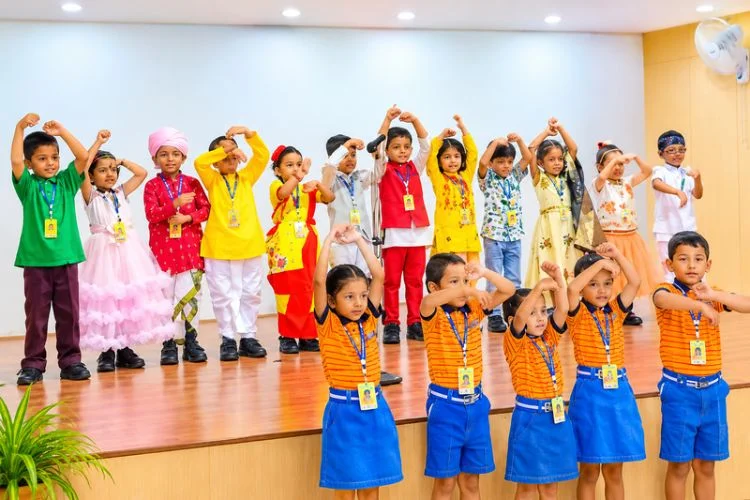
Early childhood is one of the most important stages of a child's development. During these formative years, children begin exploring the world, developing communication skills, building relationships and understanding their surroundings. A positive school environment plays a significant role in shaping these early experiences. For parents considering admission for nursery near me in Hooghly, understanding the importance of a child-friendly learning environment can help them make a more informed educational decision.
A nursery classroom should be more than a place where children learn letters, numbers and colours. It should be a welcoming space where they feel safe, respected, encouraged and excited to discover something new every day.
What Is a Child-Friendly Learning Environment?
A child-friendly learning environment is a safe, comfortable, inclusive and stimulating space designed around the physical, emotional, social and intellectual needs of young children. It combines suitable classroom arrangements, supportive teachers, age-appropriate learning materials and opportunities for creative exploration.
Unlike traditional classrooms that may focus heavily on formal instruction, nursery environments encourage children to learn through activities, storytelling, music, movement, games and interaction. India's National Curriculum Framework for the Foundational Stage 2022 also emphasizes play-based and activity-based learning for children aged 3 to 8 years.
Why Is a Child-Friendly Environment Important in Nursery Education?
1. Creates a Sense of Safety and Comfort
Starting nursery school is often a child's first experience of spending time away from family. A welcoming classroom, friendly teachers and predictable daily routines can make this transition easier.
When children feel emotionally and physically secure, they become more comfortable participating in classroom activities. Clean spaces, suitable furniture, safe play equipment and attentive supervision also help reduce avoidable risks.
2. Encourages Curiosity and Creativity
Young children naturally learn by asking questions, observing objects and experimenting with their surroundings. A stimulating classroom provides opportunities to explore through colourful learning materials, puzzles, building blocks, drawing, painting and imaginative play.
These activities encourage children to think independently, express ideas and discover different ways of solving simple problems. Instead of memorising information, they develop an interest in understanding how things work.
3. Supports Social and Emotional Development
Nursery education introduces children to important social experiences. They learn to share toys, take turns, communicate with classmates and participate in group activities.
A supportive learning environment helps children understand their emotions and develop positive relationships. Teachers who listen patiently and respond sensitively can guide children in managing frustration, expressing feelings and respecting others.
4. Makes Learning Enjoyable Through Play
Play is an essential part of early childhood education. Children can develop important skills while participating in activities that feel natural and enjoyable.
For example, building towers with blocks introduces basic concepts of shapes, balance and measurement. Singing rhymes supports language development, while sorting colourful objects helps children recognise patterns and differences.
The National Curriculum Framework for the Foundational Stage encourages free play, guided play and structured play as valuable approaches to early learning. A balanced nursery programme uses these activities to make education engaging and meaningful.
5. Develops Language and Communication Skills
A child-friendly classroom creates regular opportunities for children to speak, listen, ask questions and express themselves. Storytelling, picture books, group conversations, songs and role-playing activities help introduce new vocabulary.
Teachers can encourage children to communicate in familiar languages while gradually supporting their development in the school's instructional language. This approach helps children gain confidence without feeling pressured to communicate perfectly from the beginning.
6. Promotes Physical and Motor Skill Development
Physical activities are equally important in nursery education. Children need opportunities to walk, run, jump, balance, draw, colour and handle different objects.
Outdoor play supports gross motor development, coordination and physical confidence. Activities such as clay modelling, stacking blocks, threading beads and drawing help strengthen fine motor skills that are useful for future writing and everyday tasks.
7. Builds Independence and Confidence
A positive learning environment gives children opportunities to make small decisions and complete age-appropriate tasks independently. Choosing an activity, arranging toys, keeping belongings in designated places and participating in classroom routines can gradually develop responsibility.
Teachers should appreciate effort, encourage participation and allow children to learn at their own pace. This helps build confidence without creating unnecessary academic pressure.
Essential Features of a Good Nursery Learning Environment
Parents evaluating a nursery school should look beyond attractive classroom decorations. The overall learning experience matters more than appearance alone.
Some important features include:
- Safe and hygienic classrooms: Clean, well-ventilated and adequately lit spaces with child-appropriate furniture.
- Supportive teachers: Educators who communicate patiently and understand early childhood development.
- Activity-based learning: Opportunities for storytelling, music, art, puzzles and interactive games.
- Inclusive participation: Activities that respect individual learning abilities, interests and developmental differences.
- Outdoor play facilities: Suitable spaces for movement, recreation and physical development.
- Parent-school communication: Regular communication about children's activities, participation and progress.
How Parents Can Choose the Right Nursery School in Hooghly
Choosing a nursery school requires careful consideration because the first educational experience can influence how children feel about learning. Parents exploring nursery admission in Hooghly should consider the school's teaching approach, classroom atmosphere and opportunities for overall development.
Before making a decision, parents can:
- Visit the school and observe the classroom environment.
- Understand how teachers interact with young children.
- Ask about play-based teaching methods and daily activities.
- Check classroom cleanliness, safety and supervision arrangements.
- Learn about the school's approach to individual attention.
- Understand how parents receive updates about their child's progress.
These observations can help families identify a school that offers a supportive beginning to their child's educational journey.
How Vision International School Supports Early Learning?
Vision International School, established in 2008 in Uttarpara, Hooghly, is an English-medium, co-educational institution affiliated with the Council for the Indian School Certificate Examinations (CISCE), New Delhi.
The school's pre-primary approach emphasizes play-way learning and engaging classroom experiences. Its early learning facilities include specialized activity rooms, educational toys and dedicated recreational areas that support children's cognitive and physical development.
The school also highlights dual-teacher support, with a class teacher and teaching assistant in each section, helping provide individual attention. Its approach to early education focuses on making learning enjoyable while encouraging curiosity, creativity and confidence.
Parents interested in understanding the school's pre-primary programme can visit the official admissions page to learn more about the learning approach and admission-related information.
Frequently Asked Questions (FAQs)
1. Why is a child-friendly environment important in nursery education?
A child-friendly environment makes children feel safe, comfortable and confident. It encourages curiosity, creativity, social interaction and learning through play.
2. What are the features of a good nursery classroom?
A good nursery classroom should have clean and safe spaces, age-appropriate learning materials, supportive teachers, interactive activities and opportunities for indoor and outdoor play.
3. How does play-based learning help nursery children?
Play-based learning supports language, motor, social, emotional and problem-solving skills. It allows children to understand basic concepts through enjoyable activities and practical experiences.
4. How can parents choose the right nursery school in Hooghly?
Parents should consider teaching methods, teacher-child interaction, classroom safety, hygiene, play facilities, individual attention and communication between the school and families.
5. Why are supportive teachers important in nursery education?
Supportive teachers help children adjust to school, express their feelings, participate in activities and develop confidence. Their guidance also makes learning more comfortable and engaging.
6. What should children learn during nursery education?
Nursery education should introduce foundational language, early numeracy, communication, creativity, social interaction, physical coordination and independence through age-appropriate activities.
Final Thoughts
A child-friendly learning environment is an essential part of meaningful nursery education. It helps children feel secure, explore their interests, develop social skills and build confidence through everyday experiences. A combination of caring teachers, safe classrooms, play-based activities and individual attention creates a strong foundation for lifelong learning.
For parents choosing a nursery school in Hooghly, the priority should be finding an institution where children are encouraged to learn naturally and grow at their own pace. Vision International School believes in providing a nurturing beginning through engaging learning experiences and a supportive educational environment.



Comments (0)
Leave a Comment