
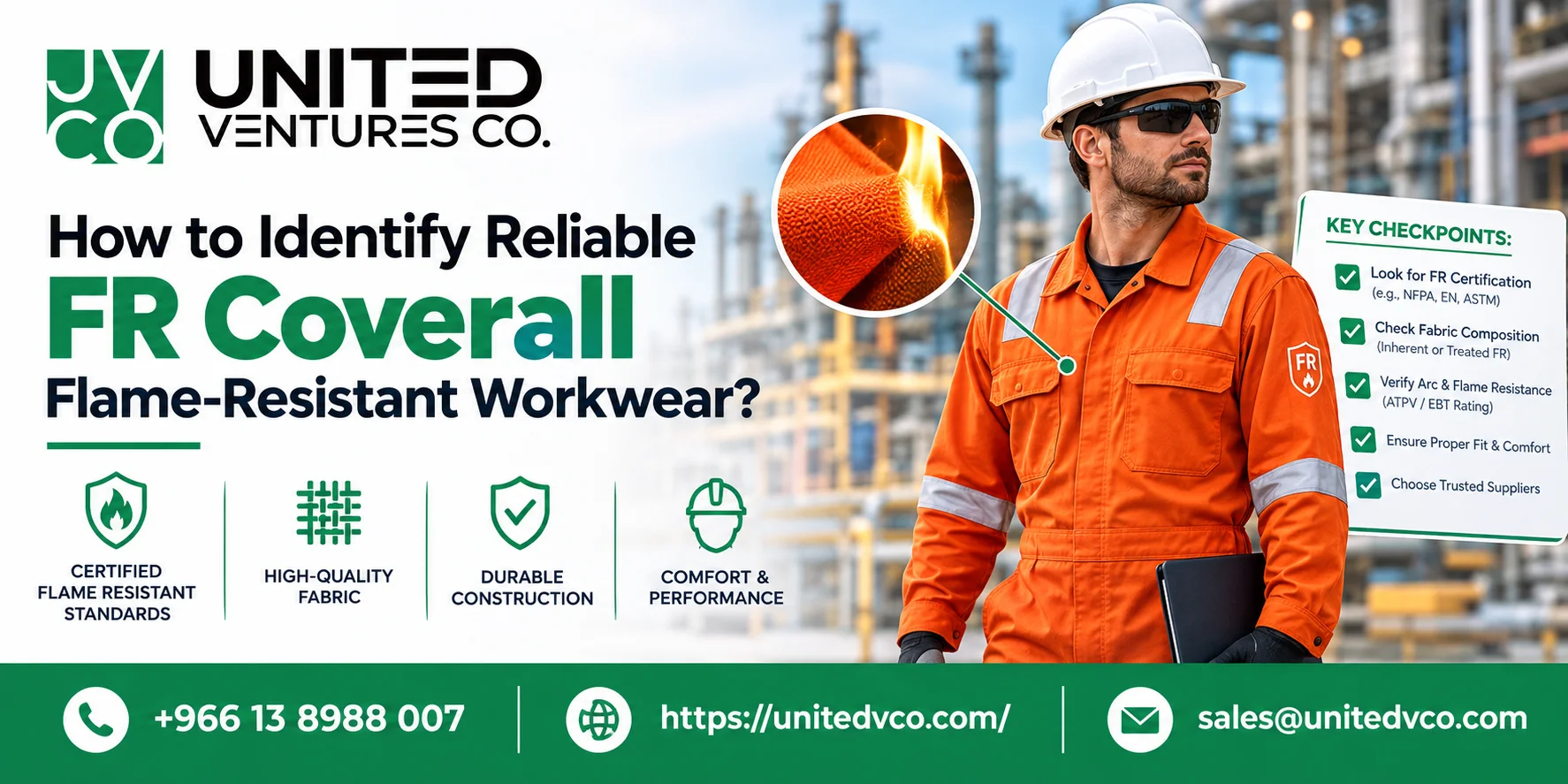
In Saudi Arabia, where workers handle hot equipment, welding operations, electrical systems, and flammable materials, protective clothing is more than a uniform. It can be a critical part of workplace safety. But what separates genuinely flame-resistant workwear from ordinary clothing? The answer lies in the fabric, construction, testing, and suitability for the hazards workers face every day.
A reliable coverall uniform should do more than look professional. It must provide protection appropriate to the job, fit comfortably during long shifts, and retain its protective properties when cared for correctly. Understanding these qualities helps Saudi businesses make better purchasing decisions without confusing marketing claims with proven safety performance.
1. The Science Behind Flame-Resistant Fabric
Flame-resistant (FR) clothing is designed to resist ignition, limit flame spread, or help prevent continued burning after the ignition source is removed. However, flame resistance does not mean a garment is fireproof. Intense heat, prolonged flame exposure, or molten substances can still cause serious injuries.
There are two common approaches to making protective fabrics flame resistant:
- Inherent flame-resistant fibres: These fibres have flame-resistant properties built into their chemical structure. Their protective characteristics are not simply a surface treatment.
- Flame-retardant treated fabrics: These materials receive a treatment intended to improve their resistance to ignition and burning. Their performance depends on the treatment, fabric construction, and permitted care procedures.
Neither category automatically guarantees better protection in every situation. The right choice depends on the specific hazard, applicable standards, fabric performance, and expected working conditions.
2. Why Fabric Quality Alone Is Not Enough
Imagine a welder working at an industrial facility in Jubail. The fabric may resist flames, but an exposed zipper, loose cuff, or poorly secured closure could still create a route for sparks to reach the skin. Effective protective clothing must work as a complete system, not merely as a piece of flame-resistant material.
Look closely at garment construction
When evaluating FR workwear, pay attention to these practical details:
- Seams and stitching: Check whether construction is suitable for the garment's intended protective application.
- Closures and fasteners: Front closures, cuffs, and pockets should be designed to reduce unnecessary exposure and snagging risks.
- Fit and coverage: Sleeves, legs, and the torso should remain adequately covered while workers bend, climb, or operate equipment.
- Compatibility: The garment must work with other required PPE, such as gloves, safety footwear, helmets, and face protection.
Small design details can make a substantial difference. Even a high-quality fabric may not deliver the intended level of protection if the garment is damaged, incorrectly fitted, or unsuitable for the task.
3. Check Safety Standards Before Buying
Certifications and test reports help buyers distinguish verified performance from vague claims such as “fire-safe” or “industrial grade.” The appropriate standard depends on the hazard rather than the product description alone.
For example, ASTM F1506 addresses flame-resistant textile materials used in clothing for electrical workers exposed to momentary electric arcs and related thermal hazards. NFPA 2112 covers flame-resistant garments for protection against short-duration thermal exposures from industrial flash fires. These standards address different risks, so they should not be treated as interchangeable.
Useful reference points include:
- ASTM International for relevant textile and protective-clothing test standards.
- National Fire Protection Association (NFPA) for standards covering flash-fire protective clothing and related safety requirements.
- Occupational Safety and Health Administration (OSHA) for workplace PPE guidance and hazard assessment resources.
Saudi employers should also verify applicable Saudi regulations, project specifications, and client requirements. Before placing a bulk order, request relevant conformity documents, test reports, and manufacturer instructions. A product's compliance claim should be supported by documentation for the exact garment or material being purchased.
4. Choose Workwear for Saudi Arabia's Climate
Heat is a major practical consideration at construction sites, refineries, industrial plants, and outdoor maintenance facilities across Saudi Arabia. A garment that provides suitable thermal protection but traps excessive heat can make long shifts harder to manage.
When assessing coveralls consider the fabric weight, breathability, fit, and intended environment. Lightweight construction may improve comfort, but reducing fabric weight must never compromise the protection required for the job.
Buyers should evaluate:
- Whether the garment is suitable for the actual temperature and exposure conditions.
- Whether its design allows practical movement during demanding tasks.
- Whether workers can layer it with other required protective equipment without creating gaps or restricting movement.
- Whether workplace heat-stress controls, rest breaks, hydration, and shaded recovery areas are also in place.
Remember, flame-resistant clothing does not automatically provide protection against every industrial hazard. Chemical splashes, molten-metal exposure, and electrical arc flash may require additional or specialised protective features.
5. Washing, Inspection, and Replacement Matter
Even well-made FR clothing needs proper maintenance. Repeated washing, contamination, abrasion, and repairs can affect a garment's condition. Treated fabrics may have specific laundering restrictions, while inherent flame-resistant fibres retain their basic flame-resistant properties but can still become unsafe through damage or contamination.
Establish a clear care routine that includes:
- Following the manufacturer's laundering and drying instructions.
- Checking for tears, worn seams, damaged closures, and persistent contamination before each use.
- Keeping records of inspections, repairs, and replacement where workplace procedures require them.
- Removing garments from service when their condition no longer supports safe use.
Oil, grease, fuel, and other combustible contaminants can increase fire risk even when the underlying fabric is flame resistant. Workers should never assume that a garment remains safe simply because its label is still attached.
Frequently Asked Questions
1. Does flame-resistant clothing prevent all fire injuries?
No. FR clothing is designed to reduce certain fire-related risks, but it cannot eliminate burns or protect against every level of heat exposure. Appropriate hazard assessment and additional PPE remain essential.
2. What is the difference between FR and fireproof clothing?
Flame-resistant clothing is designed to resist ignition or limit burning under specified conditions. Fireproof suggests complete immunity to fire, which ordinary protective garments cannot guarantee.
3. How can Saudi businesses verify an FR coverall's quality?
Review the manufacturer's technical specifications, relevant test reports, applicable certifications or conformity documents, and care instructions. Confirm that the garment is suitable for the actual workplace hazards and project requirements.
4. Can flame-resistant coveralls be washed regularly?
Yes, provided they are laundered according to the manufacturer's instructions. Inspect garments regularly and replace those that are damaged, contaminated, or no longer suitable for use.
Final Thoughts
A truly flame-resistant coverall combines suitable materials, dependable construction, verified performance, and correct maintenance. For Saudi businesses, the smartest purchasing decision is not necessarily the cheapest garment or the one with the boldest safety claim. It is the garment matched to the workplace hazard, supported by credible documentation, and comfortable enough for workers to use correctly throughout their shifts.

Comments (0)
Leave a Comment