

Selecting a school for your child is one of the most important decisions a parent makes. Class 6 marks a significant transition from primary to middle school, bringing new subjects, greater academic expectations, and opportunities for personal growth. The right school should offer more than good examination results; it should build confidence, curiosity, discipline, and skills that prepare children for the future.
Why Is Choosing the Right Class 6 School Important?
Class 6 is an important stage in a student's educational journey. Children begin exploring subjects in greater depth and gradually develop independent learning habits. Their academic responsibilities increase, while communication, critical thinking, and problem-solving become equally important.
According to India's National Education Policy (NEP) 2020, Classes 6 to 8 form the Middle Stage of school education. This stage introduces more specialised subject learning, encourages experiential education, and helps students understand abstract concepts through practical activities.
Therefore, parents searching for 6th standard admission Howrah should consider the school's academic approach, teaching environment, infrastructure, and opportunities for overall development before making a decision.
1. Check the School's Curriculum and Academic Approach
A well-structured curriculum provides students with a strong foundation for future academic challenges. Parents should understand the educational board, subjects offered, teaching methods, and assessment patterns followed by the school.
Vision International School is affiliated with the Council for the Indian School Certificate Examinations (CISCE), New Delhi. Its educational approach combines traditional teaching methods with modern learning techniques to encourage creativity, analytical thinking, and independent understanding.
While comparing schools, consider whether the curriculum:
- Encourages conceptual understanding instead of depending entirely on memorisation.
- Provides balanced attention to languages, mathematics, science, and humanities.
- Includes projects, classroom discussions, and practical learning activities.
- Helps students develop communication and problem-solving abilities.
2. Look for Qualified and Supportive Teachers
Teachers play an important role in shaping a child's academic confidence. At the middle-school level, students begin learning from different subject specialists, making effective teaching and individual guidance particularly valuable.
Parents should understand the teachers' qualifications, subject knowledge, classroom experience, and ability to support students with different learning requirements. A good teacher does more than explain textbook lessons; they encourage questions, identify learning difficulties, and motivate children to improve.
It is also worth checking whether the school maintains an appropriate student-teacher ratio. Smaller, manageable classroom groups can make it easier for teachers to understand individual progress and provide meaningful feedback.
3. Evaluate Infrastructure and Modern Learning Facilities
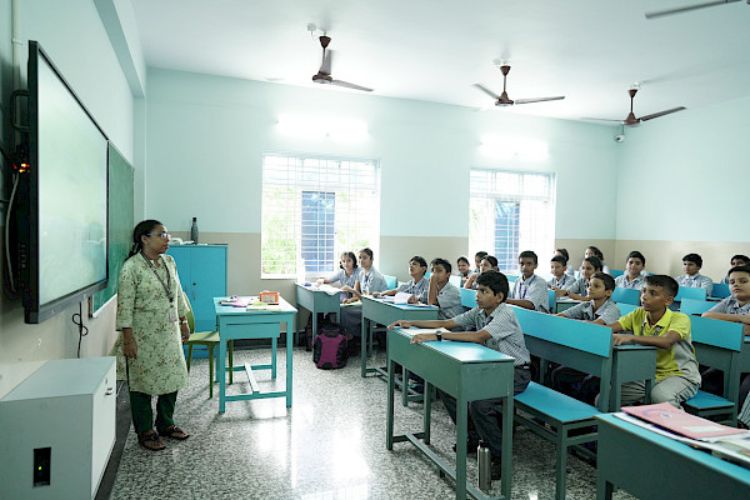
A school's infrastructure should support both academic and extracurricular development. Comfortable classrooms, well-equipped laboratories, libraries, and sports facilities contribute to a more engaging educational experience.
When visiting a school, parents should pay attention to:
- Well-maintained classrooms with suitable learning resources.
- Science and computer laboratories for practical activities.
- A library that encourages reading and independent research.
- Sports facilities and spaces for creative activities.
- Digital learning resources that support classroom teaching.
Technology is also becoming increasingly relevant in modern education. However, it should be used thoughtfully, helping students understand concepts, complete projects, and develop digital skills rather than distracting them from meaningful learning.
4. Give Importance to Practical Learning and New-Age Skills
Children learn effectively when they can connect classroom knowledge with real-life situations. Practical activities, group projects, experiments, and creative assignments help students understand subjects beyond their textbooks.
The NEP 2020 encourages experiential learning throughout school education. It also recommends vocational exposure and a ten-day bagless period during Classes 6 to 8, providing opportunities to explore practical skills and interact with people from different professions.
Parents should therefore look for schools that encourage:
- Science experiments and mathematical activities.
- Robotics, coding, and introductory artificial intelligence concepts.
- Project-based learning and collaborative assignments.
- Debates, quizzes, presentations, and public speaking.
These activities can help children become more confident, independent, and comfortable with solving unfamiliar problems.
5. Consider Sports and Co-Curricular Opportunities
Academic achievement is important, but children's development should not be restricted to classroom lessons. Sports, music, dance, theatre, art, and literary activities help students discover their interests and develop social skills.
Participation in group activities teaches teamwork, patience, discipline, and leadership. Physical activities also encourage healthy habits and provide students with opportunities to manage academic pressure.
Before selecting a school, ask about the available sports facilities, competitions, cultural programmes, clubs, and opportunities for students to participate in different activities. A balanced environment allows children to explore their abilities without feeling that academic performance is their only measure of success.
6. Check Student Safety and School Environment
A safe and supportive school environment is essential for effective learning. Children should feel comfortable approaching teachers, interacting with classmates, and expressing their concerns without fear.
Parents should check the school's security arrangements, visitor management, supervision practices, transport safety procedures, and student support systems. It is equally important to understand how the institution handles bullying, behavioural concerns, and emergencies.
The National Commission for Protection of Child Rights provides school safety and security guidelines that highlight the importance of safeguarding children within educational institutions.
7. Understand the Admission Process and School Communication
Before applying, parents should review admission eligibility, required documents, registration procedures, academic session dates, and fee-related information. Visiting the school and speaking with the admission team can help clarify important details.
Parents considering admission for 6th class in Howrah should also evaluate how effectively the school communicates academic progress, attendance, upcoming activities, and student development.
Regular communication between parents and teachers creates a stronger support system. It helps families understand their child's progress and address academic or behavioural concerns at an early stage.
Why Consider Vision International School?
Vision International School, located in Uttarpara, Hooghly, is an English-medium, co-educational institution affiliated with CISCE, New Delhi. Established in 2008 under the Vision Educational Trust, the school focuses on academic development, discipline, creativity, and future-ready learning.
Its middle-school learning environment includes access to specialised Mathematics, Science, Computer, and Robotics laboratories. Students also benefit from an Apple iMac Project Lab, AI-related learning opportunities, and activities that encourage practical understanding and digital skills. The school provides opportunities for participation in debating, quizzes, public speaking, music, dance, theatre, and different sports.
By combining academic instruction with technology, practical activities, and co-curricular opportunities, Vision International School aims to support students during this important educational transition. Parents can explore its middle school admission details to understand the learning environment and available facilities.
Frequently Asked Questions (FAQs)
1. What should parents consider when choosing a school for Class 6?
Parents should evaluate the curriculum, teachers, infrastructure, safety arrangements, extracurricular activities, teaching methods, and communication with families. The school should support both academic progress and overall development.
2. Why is Class 6 an important stage in education?
Class 6 begins the middle-school stage under NEP 2020. Students encounter more specialised subjects, abstract concepts, practical activities, and greater academic independence.
3. Is extracurricular education important for Class 6 students?
Yes. Sports, music, art, debates, and other activities help children develop confidence, teamwork, creativity, communication, and leadership skills alongside academic knowledge.
4. What facilities should a good middle school provide?
A good middle school should provide comfortable classrooms, qualified teachers, a library, science and computer laboratories, sports facilities, digital learning resources, and a safe environment for students.
Final Thoughts
Choosing the right school for Class 6 requires careful consideration of a child's academic needs, interests, personality, and future aspirations. Parents should look beyond reputation and examine the actual learning environment, teaching quality, facilities, and opportunities available to students. A school that balances academic excellence with practical learning, creativity, discipline, and personal development can provide a strong foundation for future success. Vision International School offers parents an opportunity to explore a learning environment focused on nurturing confident, responsible, and future-ready individuals.


Comments (0)
Leave a Comment