
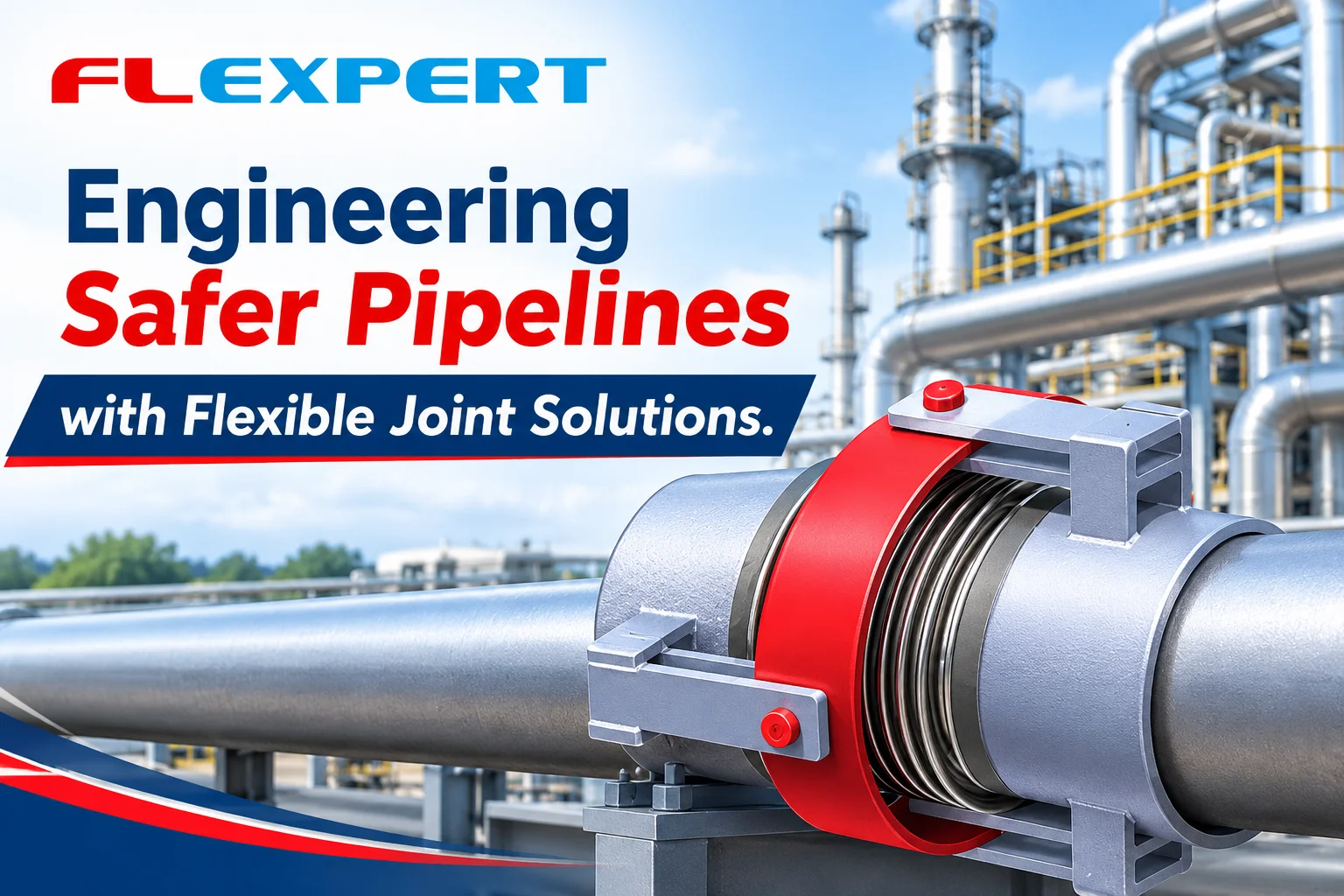
Industrial safety often depends on components that rarely receive attention until something goes wrong. In high-temperature and high-pressure environments, pipeline movement can create serious mechanical challenges. Thermal expansion, vibration, and equipment misalignment may gradually weaken connections. Advanced expansion joint technology helps manage these stresses, protecting equipment, improving operational reliability, and supporting safer industrial performance.
Choosing the right lateral expansion joint manufacturer in India can make a meaningful difference when designing reliable industrial piping systems. These specialized components accommodate sideways movement while reducing unwanted stress on connected equipment. For industries where uninterrupted operations and workplace safety matter, investing in properly engineered expansion joints is a practical decision rather than an optional upgrade.
Understanding the Role of Lateral Expansion Joints in Industrial Safety
Industrial pipelines experience continuous physical changes. Temperature fluctuations cause pipes to expand and contract, while pumps, compressors, and other machinery introduce vibration. Over time, these movements can place excessive loads on pipe connections, supports, and nearby equipment.
Lateral expansion joints are designed to absorb movement perpendicular to the pipeline's longitudinal axis. Their flexible construction helps accommodate sideways displacement without transferring the entire movement load to surrounding structures.
Think of them as shock absorbers for industrial piping. Just as a vehicle suspension system manages road impacts, these components help control movement-related stress within a pipeline network. When correctly selected and installed, they can contribute to:
- Reduced mechanical stress on connected pipelines and equipment.
- Better accommodation of thermal expansion and contraction.
- Lower risk of premature damage caused by excessive movement.
- Improved reliability across demanding industrial applications.
Why Advanced Expansion Joint Technology Matters?
Not every expansion joint is suitable for every operating environment. Modern industrial facilities require components designed around actual movement requirements, pressure conditions, temperature ranges, and material compatibility.
1. Managing Thermal Expansion Effectively
When pipelines carry steam, hot gases, or heated fluids, temperature changes can produce significant dimensional movement. Without suitable flexibility, this movement may increase loads on anchors, supports, and connected machinery. Advanced lateral expansion joints help accommodate the required displacement, supporting more controlled pipeline operation.
2. Protecting Equipment from Unnecessary Stress
Excessive piping loads can affect pumps, turbines, compressors, and other sensitive equipment. A properly engineered joint helps manage movement before it creates additional mechanical strain. This is particularly valuable in power generation, petrochemical processing, refineries, and manufacturing facilities.
3. Supporting Long-Term Operational Reliability
Unplanned shutdowns can interrupt production and increase maintenance expenses. Selecting suitable materials, movement capacity, and pressure ratings helps reduce avoidable component failures. However, expansion joints are not a substitute for proper piping supports, anchors, guides, or routine inspections. Every element must work together.
Important Features to Consider When Selecting Expansion Joints
Choosing an expansion joint should involve more than comparing prices or product dimensions. Engineers need to understand the operating environment and evaluate whether the proposed design matches the system's actual requirements.
Some important considerations include:
- Material selection: Stainless steel and other suitable alloys should be evaluated according to temperature, pressure, and fluid compatibility.
- Movement capacity: The joint must accommodate the expected lateral displacement without exceeding its design limitations.
- Pressure and temperature ratings: Operating conditions should remain within the component's specified limits.
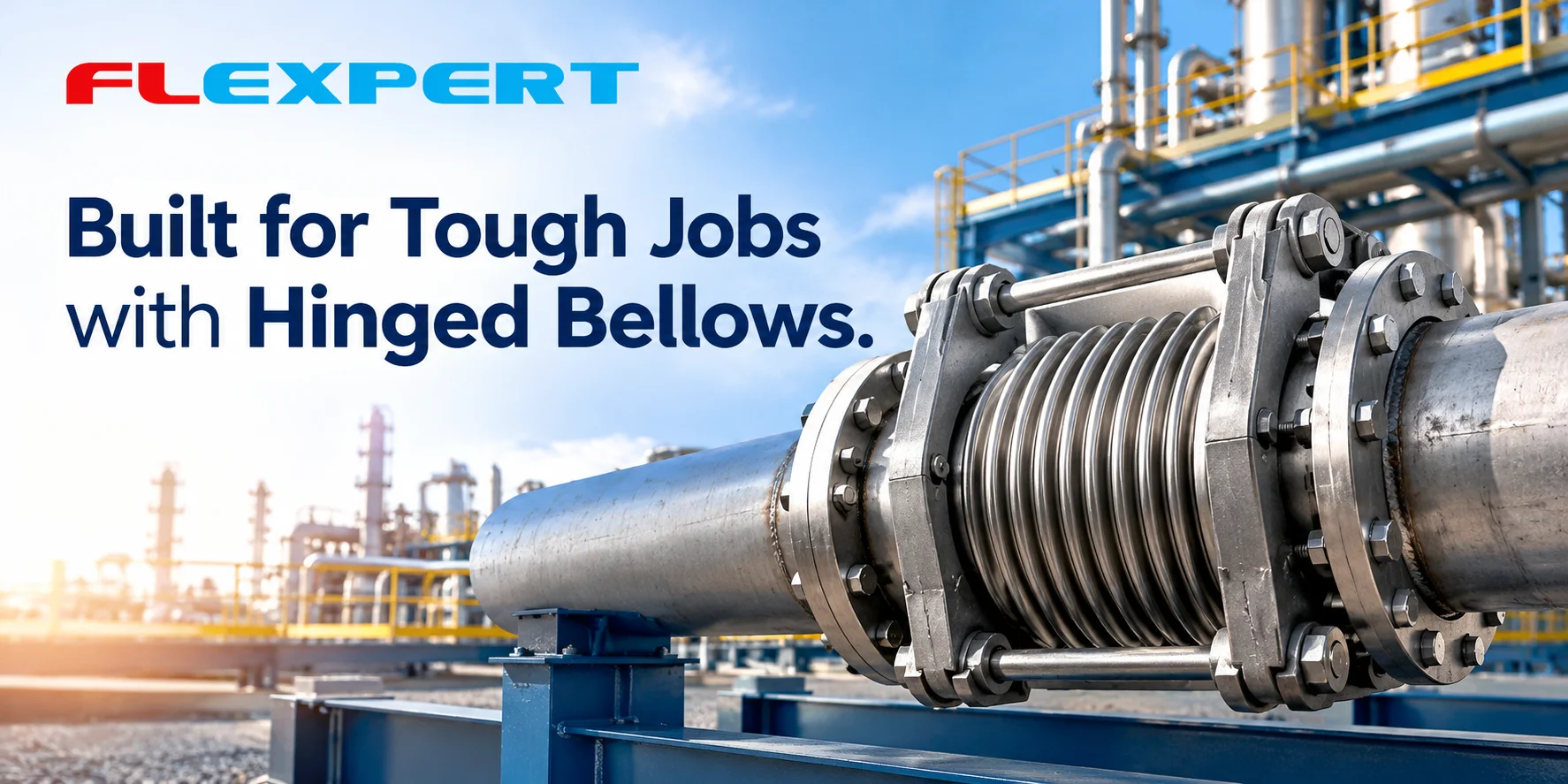
- Design configuration: Proper selection of bellows, tie rods, hinges, and other accessories depends on the piping arrangement.
- Installation requirements: Alignment, anchoring, guiding, and installation procedures must follow the manufacturer's recommendations.
For a broader understanding of selecting suitable pipeline components, explore this Pipe Joint Buying Guide: What Industries Should Never Overlook. It highlights why careful evaluation matters before making an industrial piping investment.
Where Bellows Expansion Joints Make a Difference?
Flexible piping solutions are widely used across industries that handle demanding operating conditions. Properly specified bellows expansion joints can help accommodate movement in steam lines, exhaust systems, chemical processing pipelines, and power plant installations.
For example, consider a manufacturing facility where a long pipeline carries hot process fluids. During operation, temperature changes cause the pipe to expand sideways around structural obstacles. Without adequate movement accommodation, connected sections may experience unwanted loads. A correctly designed lateral expansion joint helps manage this displacement and supports the overall piping arrangement.
Still, the joint must be selected according to the complete system design. Incorrect placement or inadequate anchoring can create new problems rather than solve existing ones.
Installation and Maintenance: The Safety Essentials
Even a premium expansion joint cannot deliver dependable performance when installation is neglected. A practical maintenance approach should include:
- Inspecting bellows surfaces for corrosion, deformation, cracks, or visible damage.
- Checking anchors, guides, supports, and connected hardware for proper condition.
- Verifying that the installed joint has not been subjected to excessive movement or torsion.
- Following manufacturer-approved inspection and maintenance recommendations.
Safety management also involves following applicable engineering standards. For example, OSHA's Process Safety Management standard, 29 CFR 1910.119, addresses mechanical integrity requirements for covered process equipment, including piping systems. Facilities can consult the official OSHA standard when developing relevant inspection and maintenance procedures.
Frequently Asked Questions
1. What is a lateral expansion joint used for?
A lateral expansion joint accommodates sideways movement in industrial piping systems. It helps manage displacement caused by thermal expansion, vibration, and structural movement.
2. Which industries commonly use lateral expansion joints?
Power generation, oil and gas, petrochemical, chemical processing, steel manufacturing, and other heavy industries use lateral expansion joints in suitable piping applications.
3. How do expansion joints improve pipeline safety?
They accommodate specified pipe movement and help reduce excessive mechanical stress on connected equipment, supports, and pipeline sections when correctly engineered and installed.
4. How often should lateral expansion joints be inspected?
Inspection frequency depends on operating conditions, manufacturer recommendations, and the facility's maintenance program. Regular visual inspections and condition-based assessments help identify potential problems early.
Final Thoughts
Industrial safety is rarely achieved through one major investment. It comes from making thoughtful engineering decisions at every stage, including selecting the right piping components. Advanced lateral expansion joints offer an effective way to manage sideways movement, support equipment reliability, and reduce unnecessary mechanical stress. By prioritizing proper design, professional installation, and consistent maintenance, industries can build safer and more dependable pipeline systems for the long run.
Listen Here: Click Now

Comments (0)
Leave a Comment