
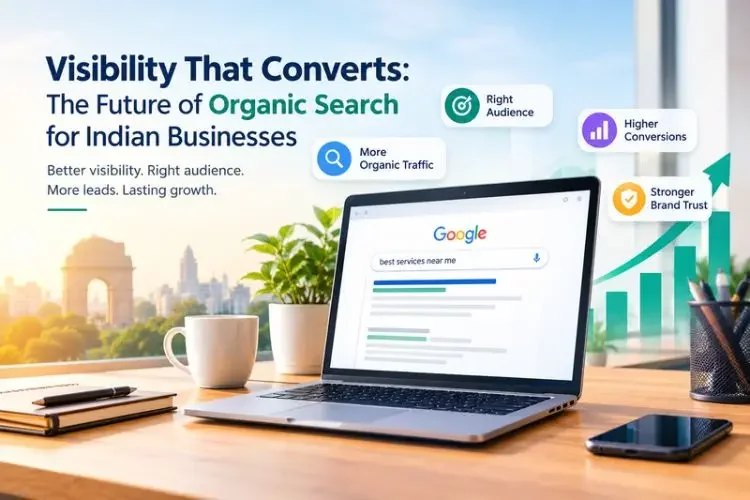
Organic search is becoming more valuable for Indian businesses when it attracts the right audience, answers genuine questions, and encourages meaningful action. Rankings alone are no longer enough. Sustainable growth comes from combining helpful content, technical SEO, search intent, and a trustworthy online presence. Businesses working with a search engine optimization company India should focus on turning search visibility into measurable business results, not simply increasing website traffic.
What Does Organic Search Visibility Mean Today?
Organic search visibility refers to how frequently and prominently a website appears in unpaid search results for relevant queries. It includes traditional search listings and, increasingly, the wider search experience in which users discover information through AI-generated answers, local results, and other search features.
However, visibility only creates business value when it reaches people who are likely to need a product or service. A website attracting thousands of unrelated visitors may generate fewer enquiries than a smaller website answering the precise questions of potential customers.
Consider an Indian home renovation company. Ranking for a broad phrase such as “home design” might attract students, researchers, and casual browsers. Appearing for “home renovation contractor in Pune” is more likely to reach someone preparing to hire a professional.
The difference is simple: effective SEO connects relevant searches with useful answers and a clear next step.
Why Is Organic Search Changing for Indian Businesses?
1. Search Intent Matters More Than Isolated Keywords
People search for different reasons. Some want to learn, some compare options, and others are ready to make a purchase. Content should reflect these differences instead of forcing every visitor toward the same sales page.
- Informational intent: Answer questions through practical guides, explanations, and educational articles.
- Commercial intent: Help people compare services, understand benefits, and evaluate their options.
- Transactional intent: Provide clear pricing information where appropriate, service details, enquiry forms, and contact options.
For example, a person searching for “how does ceramic coating work?” needs an explanation. Someone searching for “ceramic coating service in Kolkata” is more likely to be evaluating local providers. Matching the page to the searcher's actual need creates a more useful experience and a stronger opportunity for conversion.
2. AI Search Is Expanding the Meaning of Visibility
Search engines increasingly provide summaries, direct answers, and contextual recommendations. As a result, some users obtain information without clicking through to a website.
This does not make SEO irrelevant. It makes the quality and clarity of information more important. Businesses should publish original insights, explain services accurately, support claims with credible evidence, and organize pages so that both readers and search systems can understand them.
There is no guaranteed method to secure an AI-generated citation. Nevertheless, accurate information, useful content, recognizable expertise, and accessible website structure provide a stronger foundation for long-term search visibility.
How Can Businesses Turn Visibility into Conversions?
The most effective approach connects search performance with the customer journey. A practical framework includes four steps.
Step 1: Identify Searches That Signal Real Demand
Use Google Search Console, keyword research tools, website analytics, and conversations with customers to identify the questions people ask before contacting your business.
Look beyond search volume. Examine whether a query indicates a real problem your business can solve, whether the searcher is located in your service area, and whether your offering matches their expectations.
Step 2: Create a Page That Satisfies the Search
Every important landing page should answer the main question early, explain the service clearly, and remove unnecessary uncertainty. Include practical examples, relevant evidence, and answers to common objections.
For service businesses, a page should explain what is included, who the service suits, how the process works, and how a potential customer can take the next step.
Step 3: Build Trust Before Asking for an Enquiry
Visitors are more likely to contact a business when they can assess its credibility. Useful trust signals include genuine customer reviews, verifiable case studies, transparent service information, clear contact details, and accurate business credentials.
These elements should reflect real experience. Invented testimonials or unsupported performance claims can damage trust rather than improve conversion rates.
Step 4: Measure What Happens After the Click
Track qualified enquiries, phone calls, form submissions, booked consultations, and sales where reliable tracking is available. Compare these outcomes with the pages and search queries bringing visitors to your website.
For example, if an article receives consistent traffic but few enquiries, the problem may be a mismatch between search intent and the service offered. The solution might be a clearer internal link, a more relevant call to action, or content that better addresses the reader's next question—not simply more keywords.
Why Industry-Specific SEO Creates Better Opportunities
Different industries attract different search behaviours. A strategy that works for an online retailer may not suit a local contractor or a property developer.
Consider plumbing marketing services. A customer searching for an emergency plumbing repair needs quick access to service areas, availability, and contact information. A long educational article may be useful for general maintenance searches, but it is unlikely to be the best destination for an urgent service query.
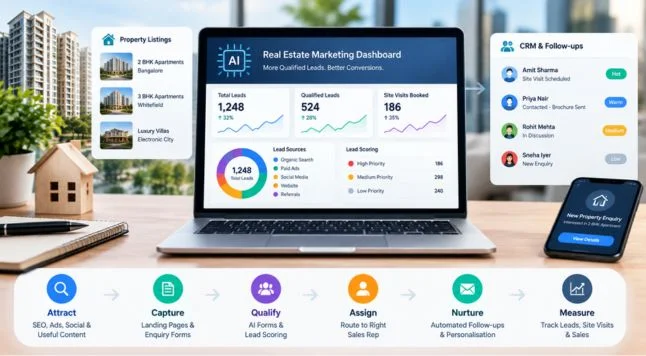
Similarly, real estate digital marketing benefits from location-specific property pages, accurate project information, useful neighbourhood guides, and straightforward enquiry options. Buyers and investors need enough detail to make informed decisions before sharing their contact information.
In both cases, the principle is the same: align content with the customer's situation rather than publishing generic pages simply to target more keywords.
Which SEO Metrics Should Businesses Prioritize?
Rankings and impressions help explain visibility, but they do not tell the whole story. A balanced measurement approach should include:
- Qualified organic traffic: Visitors whose needs align with your products or services.
- Organic conversion rate: The proportion of relevant organic visits that produce a defined action.
- Lead quality: Whether enquiries match your target customers and can realistically become sales.
- Landing-page engagement: Whether visitors find the information they need and continue toward a useful action.
- Business outcomes: Appointments, sales, revenue, or other results that matter to the company.
These metrics should be interpreted together. A change in conversion rate may reflect seasonality, pricing, sales follow-up, or a change in visitor intent—not necessarily an SEO improvement or decline.
Frequently Asked Questions
Q. What is the future of organic search for Indian businesses?
A. Organic search will continue to reward relevant information, useful user experiences, credible expertise, and strong technical foundations. AI-powered search is expanding discovery opportunities, although visibility in AI answers is not guaranteed.
Q. How long does SEO take to generate results?
A. SEO timelines vary according to competition, website condition, content quality, and resources. Some improvements may appear within weeks, while meaningful growth in competitive markets often takes several months or longer.
Q. Is organic traffic more valuable than paid traffic?
A. Neither is automatically better. Organic search can build sustainable visibility over time, while paid advertising can provide more immediate exposure. The right mix depends on business goals, budget, competition, and customer acquisition costs.
Q. How can a small Indian business compete with larger brands?
A. Focus on specific customer needs, local search opportunities, specialist expertise, accurate business information, and genuinely helpful content. Smaller businesses can compete effectively when their pages provide more relevant answers to particular searches.
Q. How can a business measure whether SEO is successful?
A. Measure qualified organic visits, enquiries, lead quality, conversion rates, and sales alongside rankings and impressions. Use analytics and conversion tracking to understand which pages contribute to business outcomes.
Conclusion: Make Visibility Worth Something
The future of organic search is not simply about appearing in more search results. It is about being visible when the right customer needs the right answer—and making the next step easy.
Indian businesses that combine relevant content, technical reliability, genuine expertise, and meaningful performance measurement will be better positioned to turn search visibility into lasting customer relationships. The strongest SEO strategy is not the one that attracts everyone; it is the one that helps the right people choose your business with confidence.
Blog Development Credits:
The foundation of this content was laid by Amlan Maiti, with creation supported by AI technologies including ChatGPT, Gemini, and Copilot, and final refinement carried out by the SEO professionals at Digital Piloto Private Limited.
Comments (0)
Leave a Comment