
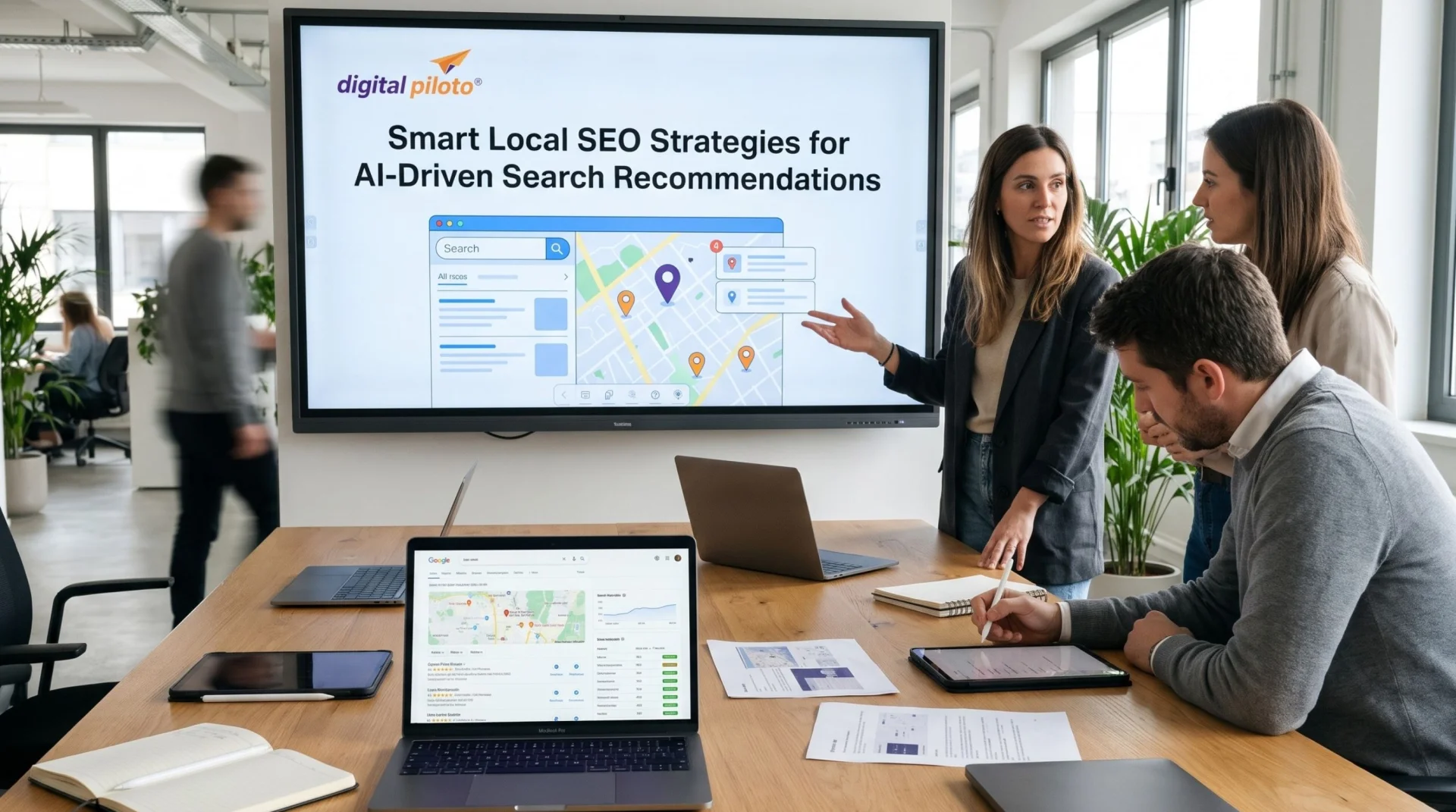
When someone asks an AI assistant to find a reliable plumber, a nearby clinic, or the best café for a family lunch, how does one business make the shortlist while another gets overlooked? Local discovery is changing. Businesses now need more than map rankings; they need accurate information, genuine credibility, and useful content that helps search systems understand why they matter.
For companies investing in SEO marketing in India, this shift creates a practical opportunity. Strong local SEO can help search engines understand where a business operates, which services it provides, and whom it serves. When AI-powered search recommendations enter the picture, consistency, relevance, and trust become just as important as traditional optimization.
Why Local SEO Is Changing
Local search once seemed relatively straightforward: a customer searched for a service, reviewed a map or a list of businesses, and clicked a result. That journey still happens, but search experiences are becoming more conversational. People may ask detailed questions such as, “Which dentist near me offers evening appointments?” or “Can you recommend an electrician who handles older apartment buildings?”
These searches reveal more than location. They communicate a need, a preference, and sometimes a constraint. A business's chances of being considered may depend on whether its online information clearly answers those concerns.
Google explains that local results are primarily influenced by relevance, distance, and prominence. Its guidance is available in the official local ranking documentation. These factors remain a useful foundation, although AI-generated recommendations can involve different interfaces and selection processes. There is no single formula that guarantees inclusion in every answer.
The practical lesson is simple: make your business easy to identify, easy to evaluate, and genuinely relevant to the people you want to serve.
Build a Reliable Local Business Profile
Your business profile is often one of the first places a potential customer checks. If the opening hours are wrong, the phone number is outdated, or the services are vague, even a strong search position may fail to produce an inquiry.
Start by claiming and verifying your Google Business Profile, where eligible, and review the information regularly. Treat it as an active customer resource rather than a form you complete once and forget.
Make the essentials accurate
- Business name: Use your real-world business name rather than adding extra keywords that do not belong in the official name.
- Address and service area: Provide accurate location details and define service areas honestly. Do not imply that you operate from an address where you do not serve customers.
- Primary category: Choose the category that best represents your main business, then add relevant secondary categories where appropriate.
- Services and attributes: Explain what you offer and add accurate details, such as accessibility features or appointment options, when the platform supports them.
- Opening hours and contact details: Keep phone numbers, website links, holiday hours, and booking information current.
Imagine two repair businesses serving the same neighbourhood. One lists only “home repairs.” The other describes its actual services, specifies its service area, shares current hours, and makes it easy to request an estimate. The second profile gives potential customers a clearer reason to make contact.
These improvements do not guarantee an AI recommendation. They reduce avoidable uncertainty and help customers decide whether a business suits their needs.
Create Local Content That Answers Real Questions
Local content should do more than repeat a city name in every heading. It should demonstrate that your business understands the area, its customers, and the practical problems people encounter there.
A roofing company might publish guidance on identifying roof damage after heavy rain. A physiotherapy clinic could explain what patients should ask before booking an appointment. A local accountant might outline the documents small businesses should prepare before a tax consultation.
These topics connect local relevance with useful expertise. They also give search engines and AI systems clearer information about the services a business provides and the questions it can help answer.
Use location pages thoughtfully
If your business genuinely serves several towns or neighbourhoods, dedicated location pages can help explain that coverage. Each page should offer meaningful local information, relevant services, and accurate contact or booking details.
Avoid creating dozens of nearly identical pages where only the place name changes. That approach offers little value to customers and can make the website feel repetitive. A stronger page explains what the business provides in that area, how customers can access the service, and what practical information they need before contacting the company.
Include natural phrases such as “emergency plumbing service in Kolkata” or “family dental clinic near Salt Lake” when they accurately describe the offering. The aim is to match real search intent, not force keywords into every sentence.
Make Your Business Easy for AI Systems to Understand
AI-driven search experiences may combine information from websites, business profiles, reviews, and other sources to answer a user's question. The exact sources vary by platform, query, and context. That makes clear, consistent business information especially useful.
Begin with your website. Your homepage should explain what the business does and where it operates. Individual service pages should describe each offering in plain language, while contact pages should make it easy to confirm the business's location and reach the right team.
Strengthen your local entity signals
A business entity is a recognizable organization associated with particular details and relationships. For local SEO, these might include the company's name, address, service category, website, team members, and the locations it serves.
Consistency across your website and legitimate external profiles helps establish a coherent picture of the business. If the company has moved, changed its phone number, or discontinued a service, update important sources instead of allowing conflicting information to remain online.
Structured data can also help search engines interpret certain details. For example, appropriate LocalBusiness schema may describe supported information about a business and its location. However, schema should reflect visible, accurate content; it does not guarantee map rankings, rich results, or AI citations. Google's LocalBusiness structured data guidance explains supported properties and implementation requirements.
Businesses working with a digital transformation agency India can bring these improvements together with website development, analytics, and customer experience planning. The strongest strategy connects technical accuracy with useful information rather than treating schema as a shortcut to visibility.
Build Trust Through Reviews and Reputation
When customers compare nearby businesses, they often want reassurance that a provider is dependable. Reviews, owner responses, project examples, and consistent service information can help them make that judgment.
Ask customers for honest feedback after a genuine interaction, following the review platform's rules. Make the process straightforward, but do not buy reviews, offer rewards in exchange for positive ratings, or pressure customers to change critical feedback.
Respond to reviews in a professional and helpful way. A thoughtful response to a complaint can demonstrate accountability, while a generic “Thank you” repeated everywhere may miss an opportunity to address a real concern. Never disclose a customer's private information when responding publicly.
It is also worth remembering that reputation is broader than a star rating. Potential customers may look for evidence of experience, relevant qualifications, transparent pricing, and clear policies. A local business that explains what happens after a booking or how it handles service issues can reduce uncertainty before the first call.
AI systems do not all assess reviews in the same way, and no particular rating guarantees a recommendation. Focus on genuine customer satisfaction because it supports the business regardless of how discovery platforms evolve.
Use Local Intent to Improve Conversions
Visibility is only half the job. If a customer discovers your business but cannot understand your offer or take the next step, the opportunity may disappear.
Match your website and business profile to the actions local customers actually want to complete. For a restaurant, that might mean checking the menu and booking a table. For an electrician, it may mean requesting a visit. For a professional service provider, it could be scheduling a consultation.
Consider these practical improvements:
- Make the next step obvious: Use clear buttons for calls, bookings, directions, or estimate requests, depending on the service.
- Explain availability: Where relevant, state appointment hours, emergency coverage, or expected response times accurately.
- Show useful evidence: Include genuine project photographs, staff credentials, service explanations, or examples of completed work when appropriate.
- Make mobile browsing easy: Keep text readable, forms short, contact options accessible, and important pages quick to use.
- Track lead quality: Measure relevant calls, bookings, form submissions, and qualified inquiries rather than counting every visit as success.
For example, a customer searching for a nearby appliance repair service may be ready to book immediately. A clear service page, accurate service area, visible phone number, and honest explanation of repair coverage could matter more to that customer than an elaborate company introduction.
Measure Local SEO and AI Discovery Together
Traditional local SEO metrics still matter. Monitor local search visibility, website visits, calls, direction requests, and qualified leads where those metrics are available. Google Business Profile and website analytics can help show how customers discover and interact with a business, although reporting varies by platform.
AI visibility requires a slightly different approach. Periodically test realistic questions that your customers might ask, such as “Which local accountants help freelancers?” or “Where can I find a family-friendly restaurant with outdoor seating?” Record whether your business appears, which sources are referenced, and whether the response accurately describes your services.
Use a consistent set of questions when comparing results over time. Responses can vary with wording, location, platform, and timing, so one test should not be treated as conclusive evidence. Where available, monitor referral visits from AI services and whether those visitors become qualified leads.
A digital marketing agency India can help align local search optimization, content, reputation management, and conversion tracking. The goal is not to chase every new AI feature; it is to identify which improvements create meaningful customer opportunities.
Common Local SEO Mistakes to Avoid
Several shortcuts can damage local visibility or waste time. Keyword-stuffing a business name, creating misleading location pages, publishing fabricated reviews, and listing services that are not actually offered can undermine trust.
Another mistake is neglecting the website after optimizing the business profile. If your profile promises a service but the linked page provides no useful details, customers may hesitate. Keep the information aligned across both places.
Finally, avoid promising guaranteed inclusion in AI recommendations. Search systems change, and businesses cannot control every factor that influences a response. Focus on what you can control: accurate details, relevant content, credible service information, and a reliable customer experience.
Frequently Asked Questions
1. What is local SEO for AI-driven search?
It is the practice of improving a local business's online information, relevance, credibility, and website experience so people can discover and evaluate it through traditional search, maps, and AI-assisted search experiences.
2. Does Google Business Profile help with AI recommendations?
A complete and accurate Google Business Profile can help customers and supported Google search experiences understand a business. However, maintaining a profile does not guarantee that the business will appear in every AI-generated recommendation.
3. How often should a local business update its SEO information?
Review core business details regularly and update them whenever opening hours, contact information, services, or locations change. It is also sensible to review performance, customer feedback, and important website pages periodically.
4. Can small businesses compete in AI-powered local search?
Yes. Smaller businesses can strengthen their position by clearly explaining their services, maintaining accurate profiles, earning genuine reviews, publishing helpful local content, and delivering a strong customer experience. Results depend on relevance, competition, location, and other factors.
Final Thoughts: Become the Useful Local Choice
Smart local SEO is no longer just about appearing on a map. It is about helping people and search systems understand what your business offers, where it operates, and why customers may find it useful. Build accurate profiles, publish genuinely helpful local content, earn authentic reviews, and make contacting you effortless. These practical foundations can support visibility across traditional search and emerging AI-driven discovery without relying on promises no business can guarantee.
Blog Development Credits
Conceptualized by Amlan Maiti, this article was shaped through research and AI-assisted drafting, then refined for editorial quality and search performance by Digital Piloto Private Limited.


Comments (0)
Leave a Comment